Youth, youth, thou hadst better
Be starv’d by thy nurse
Than live to be hanged
For cutting a purse.
(Elizabethan popular song)
File last modified:
The academic enterprise involves encountering the world as it actually is, warts and all. Thus honesty about facts, sources, ambiguities, ideas, errors, inspirations, and so on lies at the very heart of what universities are about.
Universities expect their faculty to be scrupulously honest in their research and in the presentation of their findings, and they treat even small infractions as extremely serious offenses against academic morality.
The same expectation is extended, appropriately, to students, and anything but strict honesty is treated as "cheating" and is taken quite seriously.
It embarrasses me to have to discuss cheating, since the issues seem obvious. However, lest there be any doubts, here we go. The discussion represents my views and applies to my courses. Other professors may have slightly different formulations. Unlike most professors, I've tried to include some of the less obvious stuff.
- What Is Cheating?
- What Practices Are Misunderstood to be Cheating?
- What Is Plagiarism?
- What's Special About Wikipedia?
- Do Professors Agree About Cheating?
- What Happens to Students Caught Cheating?
- What Protections Does a Student Have Against False Charges?
- How Do Professors Detect Cheating?
(Including Several Episodes of "The Disastrous Adventures of Jimmy Gimmie")- Do Students Ever Get Away With Cheating?
- How Can I Avoid Even Appearing to Cheat?
- What Are Some Examples of Policy Ambiguities?
- What Is the Faculty Told About Cheating?
- What Recent Changes or Long-Term Trends Are There?
An important category of cheating is plagiarism, that is, quoting or closely paraphrasing the writings of others while leading the reader to believe that you are the author of the text. (The word derives from Latin plagium, "kidnapping.")
Plagiarism is not the same thing as copyright infringement. The works of Charles Dickens have long since passed into the public domain, and anybody can reprint them. Therefore, if you pretend to be the author of a passage from Oliver Twist, you are not infringing on a copyright, but you are still plagiarizing.
One of the best habits you can develop is always to include the source whenever you make a note while doing research for a paper, and always to include citations in rough drafts so that you don't lose them or forget to add them later. One of the worst habits you can develop is to figure on adding source information only to the final draft. There is no way you are going remember for sure what came from where, and misattribution is likely to be counted as cheating.
Some students find that they fall into plagiarism because they are not sure how to acknowledge their sources easily and therefore leave out the citation. Learn how to do it!
For more on citation, see:
The Internet has become a major source for student (and non-student) information-gathering, almost to the exclusion of paper sources. This makes it extremely easy for the faculty (or their surrogates) to use computer-assisted plagiarism detection, since a plagiarism-detection company can do the same kinds of searches that students do. Such companies also have access to additional files, often including the papers written by other students in your same classes, both now and in the past.
Computer-assisted plagiarism detection also is widespread in computer programming classes.
University computers can also potentially spot cross-student trends in centralized disciplinary records, although the implications of this are still unclear.
Because of the efficiency of computers in detecting plagiarism cases, plagiarism tends to get the spotlight at the moment, but other kinds of academic integrity concerns have not gone away, and the increased attentiveness to plagiarism is unlikely to diminish concern with such offenses as smuggling notes into exams, text-messaging answers during exams, or having your roommate write your lab report for you.
With the rapid rise of on-line courses during the Pandemic of 2020-21, clever programmers have made a business of administering and proctoring exams that students take on-line. (Click here to see an ad for such a service.) Many of these use the camera in your computer to let a robot keep an eye on you, but there are other approaches. And in fact professors (including me) have created on-line exams and ways to detect cheating on them for years. Since you are unlikely to know exactly how such a system works in any particular course until it is too late, the chances of defeating it are not good.
Wikipedia is obviously wonderful. It is a global experiment in shared knowledge, and it has been overwhelmingly successful. It is a valuable first resource in researching absolutely anything, and the different language versions have different takes on the same subject. It is banned in China (and a handful of other totalitarian countries), which is probably among the stupidest mistakes a wannabe "modern" country can make. I confess that I am both a daily user and a financial supporter of Wikipedia. (Wikipedia is financed by donations, large and small to the Wikimedia Foundation. To reach their donation page, click here.)
This does not mean it is perfect. Articles can be incomplete, and errors can persist if knowledgeable people do not intervene to correct them.
Unless you live in China, Iran, or North Korea, Wikipedia can (and should!) be used as a source for almost anything one cares to learn about. It can be an inspiration, a pointer to sources, and a quick-and-dirty overview. And for the most part, it is impressively excellent. If it is an influential source for you on some subject, it can (and should) be cited.
That said, some professors dislike Wikipedia, mostly because it makes gathering information for student essays too easy (!), but ostensibly because it can contain errors and/or becuase it diverts students from learning how to use other sources that are closer to the actual research and reasoning on which published scholarship and student termpapers (and Wikipedia articles) should be based. These are legitimate, if futile, objections. Wikipedia is by no means a primary source (except perhaps for the study of Wikipedia itself), and perhaps even more than other sources, it is not necessarily 100% reliable. In most cases, it cannot substitute for tracking down original research reports, reading original sources, and the like. (Quite often it will point out where such resources are to be found.)
I have heard of professors who grandly declare that they will give an F to anyone who uses Wikipedia (which of course merely forces its use underground). It is wise to find out what your professor thinks about this source before you cite it.
As with any other source, if you quote without acknowledgement from Wikipedia (or anyway from the English version), pretending that you wrote the passage yourself, you will almost certainly be caught by your university's plagiarism-police-bots and hung out to dry. (For a bot, an on-line source is the easiest kind to find. And remember, in the on-line world, bots are often smarter than you are.) Some bots are also getting better at detecting paraphrase. That means that if you translate a passage from the French or Spanish or Chinese version of Wikipedia, and someone else translates the same passage, even differently, there is now a risk that a clever web-roaming bot, hopped up on AI, will notice the similarity and possibly find the source.
My prediction is that students will become better at disguising borrowed material, but the easiest thing for a student to do is simply cite the sources of any quoted material. (Just use my web page called How to Cite Sources As Painlessly As Possible.)
All professors agree that cheating is despicable. They disagree about the details. Very few of them will give you particularly useful generic guidance, but most of them are happy to answer questions with reference to their own classes.
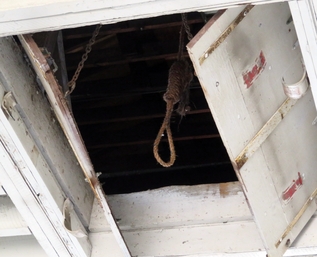
There are two, only slightly related, consequences if you are caught cheating:
Virtually none.
As far as your grade is concerned, any change in your grade because of suspected or demonstrated academic dishonesty is at the discretion of the professor, just like other grades.
Probably some universities handle this better than UCSD does. But it is never likely to be painless. The UCSD Academic Senate has a committee on grade appeals, but traditionally it had no authority to consider cases unless "non-academic criteria" —use your imagination— could be shown to have been used. Its authority was eventually broadened so that students could also appeal grades that were lowered in response to a professor's suspicion of academic dishonesty if the professor did not bring formal charges. (Grades lowered for academic dishonesty when charges are not brought are sometimes called "vigilante Fs"). To my knowledge, however, only one student has ever successfully brought such a challenge, and anyway the committee cannot actually change a grade except to convert it to a P or NP.
For practical purposes you should think in terms of there being no effective appeal. (Sometimes —rarely— a visit by a student to the department chair can help in getting the faculty member to reconsider. UCSD's college provosts are virtually never effective in this.)
The student-conduct violation is more complex. At UCSD, as at most universities, undergraduate "academic integrity" procedures provide that, if you are accused of cheating, then (as with sexual harassment) the evidence adduced does not have to remove all doubt. If you have a formal hearing, the hearing board will work under a "51% probability" rule. So if the board is "51% convinced" that you are guilty, then you are judged guilty and are subject to penalties. (The severity of your offense is often ignored; the issue is merely whether there was an offense. It is reminiscent of the unfortunate "three-strikes" laws in some states that can lock a person away for stealing a loaf of bread if it happens to be his third loaf.)
Theoretically of course you can hire a lawyer and try to sue anybody at any time for anything. However, it is rare that an external civil court agrees to accept a case brought by a student against a university to change a grade or to correct a putatively false charge of academic dishonesty. Furthermore, court cases can last longer than it takes to get a college degree. (One such case at UCSD went on for five years, ending indecisively in San Diego Superior Court long after the student had been expelled and a key witness had graduated.)
In sum, undergraduates have virtually no truly effective appeal against false charges of cheating. Your most effective defense is to avoid even the slightest appearance of cheating. And that brings us to the next topic: What do professors think cheating looks like?
Most professors have various ways to detect cheating, and we prefer to keep the details secret. However here are some fictionalized examples based on real cases that have come to my attention over the years. Names have been changed to protect the guilty.
Of course. People get away with all sorts of things. Nobody says it can't be pulled off. Like all professors, I know some of the ways it has been done successfully, and I know the weaknesses in the system that could potentially be exploited, even though they probably haven't been.
But cheating is a VERY high-risk behavior. The consequences, both institutional (if they catch you) and from your own pissed-off super-ego (which you can't escape), are not worth it.
Generally, no. It is true that it is the same student's work, but nearly all professors regard it as having been "used up" in the first class. On the other hand there may be ambiguous cases where, for example, the student dropped a class and is subsequently retaking it and wants to resubmit material written for the class the first time. (Damned if I can see why that is plagiarism, but I did see a student hauled in for it.) When in doubt, ask!
Of course not. Indeed, a colleague used to post old exams as study guides for impending ones. However, some professors, especially in on-line courses, use identical exams or quizzes term after term and are shocked and horrified when anyone uses an old one to study from. They are clearly being unrealistic/foolish/lazy, but they may still decree that students who use old exams as study guides are cheating, and the university is likely to back them up.
Certainly not if each pretends to be the sole author. However some professors allow or encourage group projects. Such arrangements must be approved by the professor very explicitly and in advance. (The experienced professor avoids the "free rider" problem in group projects by requiring each group member to turn in a confidential statement of the division of labor. Don't be a free rider and you won't have to worry about your collaborators turning you in.)
Generally, no. However many professors will agree to allow this by prior arrangement on the understanding that this allows the student to take on a more ambitious project. With the agreement of both your history professor and your anthropology professor, for example, you may be able to submit a longer paper as the assignment for both classes. Without the prior permission of both of them, however, it is pretty certainly going to be classed as cheating.
A related question is whether sections of one paper can be incorporated into another paper (for example a termpaper into a master's thesis, or a master's thesis into a Ph.D. dissertation). The answer again is that it is critical to be very clear that this is what is happening and to be absolutely sure that the faculty member(s) involved have no objection. (I have seen this get ugly.)
In published books it is not infrequent to see a footnote explaining that a certain chapter began life as a journal article or a conference paper. (In the professional world, it is not necessary to acknowledge that one has used one of one's own unpublished compositions in the creation of something else. Unpublished is unpublished, after all. Analogously, a student's work written in the past but never published and never submitted for a class would seem to be still "unused" and hence legitimate, although some of my colleagues would probably disagree. Somebody always does.)
Not in all countries, and not at all universities. At UCSD the answer is yes, since in some fields delaying publication risks having someone else publish a new insight or research finding first. However it is critical to be very explicit about what is being done, and to have the clear permission of one's dissertation committee.
Despite urban legends about everybody cheating, cheating is in fact rare enough (or perhaps successful enough) that most professors have little experience with it and only rarely know the details about the procedures they are theoretically expected to follow. From time to time the faculty is sent a notice providing some advice on the subject (or urging them to crack down or go through channels). As far as I can tell, they rarely pay any attention to it.
The official UCSD Policy on the Integrity of Scholarship constitutes Appendix II of the Manual of the San Diego Division of the Academic Senate. It gives all the details of how cases are theoretically supposed to be handled. (It is confusingly written and seems to be designed to put people to sleep, but it is official.) Effective Fall Quarter, 2021, a new system with sanctioning guidelines went into effect for added confusion consistency.
Nationally, student cheating continues to be an issue of great interest to the sorts of people who are interested in such things.
Over the last few years, the academic senate of one university after another has enacted revisions to its procedures. Here at UCSD, these are reflected in the descriptions of "academic consequences" above.
The effects of these changes are not yet clear. At UCSD, some faculty members have been unhappy about the severity of the sanctions, which they support in theory and in public, but which they tend to see as too severe in particular cases. It is not clear that more charges have in fact been filed since the enactment of the new procedures, and some faculty members suspect other faculty members of "covering up" some offenses because of the annoyance of the paper work or the severity of the sanctions once a case is reported. (Occasionally some professors are even darkly suspected of mercy.)
I regret to say that I have seen no evidence of faculty interest in protecting students from false charges. Students called before administrative hearings can still be convicted on the "preponderance" (read: 51%) of the evidence, and nothing realistically prevents a professor from giving a lowered grade regardless of the outcome of a disciplinary hearing or even without filing charges, thus without giving a student a chance for self-defense. (Indeed, the system seems to me to be conducive to a kind of "plea bargaining" between students and professors to swap a lower grade for the non-filing of charges regardless of actual guilt or innocence.)
The inevitable conclusion is that it is critical never to cheat, and always to avoid anything which, while innocent, could possibly be misunderstood as cheating. Remember that Jimmy Gimmie never graduated, but perished in ignominy. Well, he is a fictionalized composite (and nobody much uses the word "ignominy" any more) but you get the general idea.
If you found this page helpful, you may also wish to check out “College Study Hints or How to Prevent Homework From Screwing Up Real Life” on this web site. Link
All photos on this page were taken by me. As far as I know, all other illustrations on this page are in the public domain. (Note that, although the West Virginia State Penitentiary still has its hangman's noose, shown in the picture here, it no longer conducts executions by hanging. Similarly, the guillotine shown here remains in Hanoi's Hoa Lo prison —the infamous "Hanoi Hilton"— but it is not in active use at this time.)
 visits to this page since 160901.